

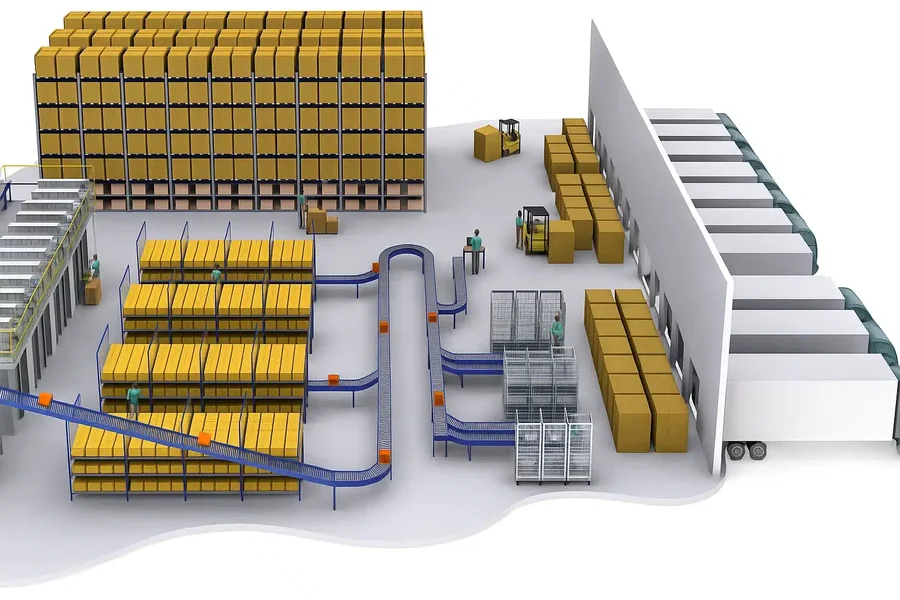
Warehouse efficiency relies on how quickly and accurately the product moves from storage to its next stop, whether that is packing, staging, or outbound shipping. In high-volume facilities, manual movement can slow flow, create congestion, and increase handling errors. Conveyor systems help solve those problems by keeping products moving in a consistent, predictable way. The key is design. A conveyor system that does not match your layout, throughput goals, and pick process can create new bottlenecks instead of removing them. This article covers the core planning steps that help you design a conveyor system that supports speed, safety, your warehouse needs, and lasting growth.
Start with Your Process
Designing an effective conveyor layout starts with understanding your warehouse’s workflow. Before you choose any equipment or map any routes, evaluate how the products are currently moving from receiving to storage, picking, packing, and shipping. Identify any bottlenecks, high-traffic zones, and areas where manual handling slows things down. A well-designed conveyor system should support your existing processes or improve upon them, rather than forcing your team to adapt to something entirely different.
Map Out Key Zones
Now, break your warehouse into functional zones and determine how materials should travel between them. Common areas include receiving docks, storage racks, picking zones, packing stations, and shipping lanes. The goal is to create a logical, continuous flow that minimizes backtracking and unnecessary handling. Straight paths are best when space allows, but you can incorporate curves and merges as needed to connect multiple zones or work with your warehouse’s layout.
Optimize for Space and Expansion
Warehouse space is valuable, so your conveyor layout should maximize both floor space and vertical space. Overhead conveyors or elevated systems can free up ground space for workers and equipment. You should also try to avoid overcrowding, because tight layouts can increase safety risks and limit access to machinery for maintenance purposes.
It’s also important to think ahead with your design. As your business grows, your product lines may expand or volume orders may increase. Designing a layout with modular components allows you to extend or rework the system without having to start from scratch.
Reduce Touchpoints and Manual Work
Every time a product is handled manually, there’s a chance for delays or human errors. A well-planned conveyor setup minimizes those touchpoints by automating as much as possible. For example, integrating conveyors directly with sorting systems or packing stations can improve your operations and increase accuracy.
If you’re ready to start designing and installing a conveyor system, a material handling supplier can help with everything from concept to installation to ensure your system is efficient for your space and needs.
